Palmier is a Mac-native AI video editor that lets Claude, Codex, and other AI systems help create and refine footage directly inside the editing workflow. The app focuses on agent-assisted video production, including generating cuts, organizing clips, trimming footage, and coordinating with video model integrations from one native workspace. It is useful for creators, startup teams, editors, and marketers who want to move from raw material to publishable video without bouncing between chat tools, file managers, and timelines. Palmier stands out by treating AI as an in-app collaborator rather than a separate prompt box, making it especially relevant for people experimenting with automated or semi-automated video workflows.
Koozee is an all-in-one AI visual production platform built specifically for apparel e-commerce sellers on Amazon, Shopify, TikTok Shop, and Etsy. Upload a single clothing image and Koozee generates product photos, AI model images (virtual try-on), flat lays, ghost mannequin visuals, listing assets, and marketing videos — all in one workflow. Claims up to 99% cost reduction and 12× speedup vs. traditional photoshoots. Advanced fashion-optimized models (including Nanobanana Pro) preserve garment shape, fabric texture, and fine details. Shopify app available for bulk generation. Supports lingerie, swimwear, footwear, and all apparel categories. Launched August 2026 by STARII TECHNOLOGY PTY LTD (Sydney). Pro plan $22.90/mo (annual $16.66/mo) with 600 monthly credits; new users get 30 free credits.
Pollo.ai is an AI video workspace for generating and editing videos from text prompts, images, avatars, and creative effects. It brings together text-to-video, image-to-video, video enhancement, upscaling, character animation, and multiple model choices so creators can test visual ideas without switching tools. Marketers, social media teams, educators, and indie creators can use Pollo.ai to produce short clips, ads, product visuals, and experimental video concepts faster than traditional editing workflows. The platform is useful when speed and variety matter more than manually building every shot from scratch. What makes Pollo.ai stand out is the breadth of its video toolkit: it combines generation, effects, avatars, and finishing features in a single browser-based workspace.
Slashspace is a canvas-first agentic harness designed for power AI users who want to replace fragmented tool UIs with a single, unified interface for the AI era. Originally started as RabbitHoles AI, it evolved into a canvas-as-context platform with agentic nodes — visual building blocks that represent AI capabilities, data sources, and workflow steps. Slashspace integrates the Cursor AI SDK and Composio tools, enabling users to build complex agent workflows on a visual canvas rather than writing code or chaining prompts. Featured in X Social posts in June 2026, it targets developers, designers, and knowledge workers who want to orchestrate multiple AI tools and agents in a single visual workspace. After an 18-month bootstrap build, Slashspace represents a new paradigm where the canvas becomes the context for AI collaboration.
Google Flow is a creative AI filmmaking workspace for turning prompts, images, and scenes into editable video concepts. It uses Google’s latest generative media stack to help creators brainstorm shots, generate clips, refine visual direction, and move faster from idea to rough cut. Filmmakers, marketers, designers, educators, and social teams can use Flow to prototype storyboards, test ad concepts, and explore cinematic variations without starting in a traditional video editor. The product is most useful when speed and iteration matter more than hand-crafting every frame. What makes Google Flow stand out is its native connection to Google’s multimodal models and Labs interface, giving creative users a guided environment for experimenting with AI video rather than a standalone prompt box.
Discover Lovable Dev, the cutting-edge AI tool for web development and prototyping. With live rendering, instant undo, bug fixing capabilities, and collaborative branching, it transforms how software is built. This revolutionary app builder offers seamless integration with Supabase and Github, allowing for swift one-click deployment. Lovable Dev streamlines the design-to-development process, making it effortless to iterate and customize projects with powerful AI-generated code. Revolutionize your development workflow with Lovable Devs intuitive interface and unmatched efficiency.
Hallmark is an open-source anti-AI-slop design skill for Claude Code, Cursor, and Codex that makes generated UIs look made rather than generated. Built by Hassan El Mghari (Nutlope) at Together AI and released under MIT, it encodes a tight rule set drawn from the anti-AI-slop field and refuses the on-distribution defaults every frontier model was trained on, running 57 slop-test gates before handing code back. It ships 21 macrostructures and 22 OKLCH themes across editorial, modern-minimal, atmospheric, and playful genres, and supports four verbs: build (default), audit an existing page against an anti-pattern list, redesign within existing implementation boundaries, and study a URL or screenshot to extract a portable design DNA. Install is one command via npx skills add nutlope/hallmark, and a live gallery and specimen viewer runs at usehallmark.com. It is notable now because AI-generated UI homogeneity became a visible complaint and Hallmark is the first opinionated, widely adopted skill that forces structural variety.
OpenArt Director is a conversational AI video creation workspace inside OpenArt’s creator studio. Instead of managing separate image, video, character, world, audio and editing tools, creators can guide a video by chatting with AI, then keep characters, styles and scenes consistent across a project. The page highlights quick-start prompts such as anime shorts, ads and trailers, with access to models like Veo, Kling, Nano Banana Pro and Seedance through OpenArt’s suite. It is useful for marketers, social-video creators and solo creative teams who need a more directed workflow than prompt-and-pray video generation. The tool is notable now because both local X launch evidence and the official page point to a dedicated Director experience for vibe-directing videos.
Flow by 3DAI Studio is a web-based, agentic workflow builder for 3D creation that borrows the flexible node-graph feel of ComfyUI. It helps users assemble specialized 3D nodes, logic nodes, and automated generation steps into reusable creative pipelines without building every tool from scratch. The product is aimed at 3D artists, game asset creators, product visualization teams, and AI creators who want more control over multi-step 3D workflows. Flow is notable because it applies agent-style orchestration and visual workflow design to 3D asset production, a category where creators often juggle fragmented tools. It fits Smartoolbox as a 3D and AI-agent creative automation tool.
Lokuma Design Agent is a design-intelligence API that gives AI coding agents and AI website builders real design quality instead of generic output. Rather than generating pages from scratch, it sits between your agent and the final result as an opinionated reasoning layer that front-loads structured design intent — brand tone, spatial rhythm, component hierarchy, typography pairing, and visual balance. Plug it into Claude Code, Cursor, Codex, Lovable, Bolt, or any MCP-compatible client with a single install and API key, and every page those tools generate gains premium typography, refined layout, and visual hierarchy. It is pay-as-you-go (per-call credits) with a free welcome balance, separate from Lokuma's subscription Website Builder. Founded by the maker of Readdy and Creatie, it reached #1 Product of the Day on Product Hunt.
Zepee turns a live website into demo videos and screenshots without manual screen recording or editing. Users provide a website link and tell Zepee what to show; the product claims it can click, scroll, type, and navigate the real site like a visitor, including authenticated pages, then generate reusable video and screenshot assets for Product Hunt, X, websites, and launch materials. That makes it useful for founders, indie hackers, marketers, agencies, and product teams that need fresh demos whenever a site changes. It appeared in today’s X launch artifact as a website-to-demo-video lead and was selected only after the official homepage at zepee.com verified the product identity, workflow, screenshots, and waitlist. It fits Smartoolbox under video generation, design, and productivity.
Synthesia is an AI video generation platform for creating presenter-led business videos without cameras, studios, or traditional editing. Users can turn scripts, documents, or training material into polished videos with AI avatars, voiceovers, templates, localization, and brand controls. It is commonly used for employee training, onboarding, sales enablement, product explainers, customer education, and internal communications. The platform fits learning teams, marketing departments, operations leaders, and global companies that need consistent video content in multiple languages. Synthesia is distinctive because it focuses on enterprise-ready avatar video production, making repeatable training and communication videos faster to produce while keeping style, messaging, and localization under control.
Adobe Firefly AI Assistant is an AI creative assistant that executes multi-step production tasks across Adobe apps such as Premiere, Photoshop, and InDesign. It helps users turn natural-language requests into edits, transformations, design actions, and creative refinements while staying connected to Adobe’s professional media tools. Designers, video editors, marketers, and content teams can use it to speed up routine production, explore variations, and reduce manual switching between app-specific commands. Its main advantage is deep integration with Adobe’s creative ecosystem, combining generative AI with the workflows professionals already use for images, layouts, video, and branded assets.
Avataar AI video model generates culturally aware product and marketing video content at very low per-second pricing. The model is positioned for high-volume video creation, especially for brands and platforms that need localized, India-scale visual content without traditional production costs. It can support ad creatives, ecommerce experiences, personalized product showcases, and video generation workflows where speed and price matter. The tool is best suited for growth teams, retailers, media operators, and developers building video-enabled commerce or advertising products. Its differentiator is the combination of low-cost generation, regional cultural grounding, and Avataar’s focus on immersive visual commerce rather than generic text-to-video experiments.
ComfyUI is a node-based generative AI workflow interface for building image, video, and multimodal creation pipelines. Users connect model loaders, prompts, samplers, control nodes, upscalers, and custom extensions in a visual graph, then save repeatable workflows instead of relying on one-off prompt boxes. It is useful for AI artists, video creators, technical designers, and developers who want fine control over Stable Diffusion-style generation, model experiments, and production assets. ComfyUI also supports a broad community extension ecosystem and hosted Comfy Cloud workflows, making it flexible for both local power users and teams that need shareable creative automation.
Pippit AI helps creators and businesses generate marketing videos, images, ads, and avatar content from prompts, links, files, or uploaded media. It includes a Video Agent for text-to-video, image-to-video, reference-style remixes, video translation, and customizable aspect ratios, languages, and durations. Its Image Agent creates product posters, social posts, memes, background changes, batch edits, image resizing, upscaling, and multi-style product imagery. Pippit also supports digital avatars, custom avatars, talking photos, AI dubbing, content publishing, scheduling, asset management, and performance analytics. The tool fits marketers, creators, e-commerce sellers, agencies, educators, and business owners who need fast social, product, or training content. A specific differentiator is its CapCut-powered creative workspace that combines generation, editing, publishing, and analytics in one platform.
Pika is an AI video generation platform for creating short clips, animated scenes, and stylized motion from prompts or visual inputs. It helps creators generate video concepts quickly, remix ideas, and experiment with cinematic, social, or playful formats without a full production pipeline. Marketers, social media creators, educators, designers, and indie filmmakers can use Pika to produce attention-grabbing clips, test story ideas, and add motion to creative campaigns. The platform is especially useful for fast iteration when a team needs multiple visual directions before committing to editing. What makes Pika stand out is its creator-friendly focus: it packages generative video into an approachable product that favors experimentation, quick outputs, and shareable visual effects.
Fal.ai is a generative media platform offering developers high-performance AI models for creating images, audio, and video. It provides scalable APIs, fast inference, and tools for model fine-tuning, supporting applications in creative and commercial projects
Experience tldraw - a powerful AI tool for instantly creating and transforming UI designs into functional prototypes. With tldraw, simply draw your UI, select elements, and watch them come to life with the Make Real feature. Collaborate in real-time with this free whiteboarding tool, ideal for teams and individuals looking to streamline their design process. For those seeking customization, tldraw offers a starter repository for creating personalized versions of the Make Real functionality. Embrace the future of UI design with tldraws intuitive interface and seamless integration of AI technology. Join the tldraw community today and revolutionize your design workflow.
Guizang PPT Skill is an agent skill for generating polished single-file HTML presentation decks, supporting Claude Code, Codex, and similar agent environments. It packages visual systems for editorial magazine-style slides and Swiss international layouts, plus workflows for presentation illustrations and social covers. The tool is useful for founders, educators, consultants, and developers who want AI agents to produce shareable decks without wrestling with traditional slide software or generic template output. Because it runs as a skill, it fits directly into agentic content workflows rather than acting as a separate SaaS editor. It is notable now because its April 2026 launch has strong GitHub traction and provides concrete design constraints for better AI-generated presentations.
Cogram Studio is a CAD and BIM workspace where architects, engineers, and AI agents collaborate on the same model in real time. The new product extends Cogram's AI platform for the AEC industry (meetings, RFIs, submittals, field reports) into the actual design surface, so an agent can sketch, dimension, and revise a building or part while the designer watches and directs. It targets firms that already use Cogram Agent and want an agent that knows the project, can act on geometry, and leaves a reviewable trail. Cogram is SOC 2 Type II certified, GDPR compliant, and a 14-day trial is available self-serve.
Krea.ai is an AI-powered platform that enables users to generate and enhance images and videos through advanced AI models. It offers features such as real-time image generation, photo enhancement, video creation, and logo customization, catering to creative professionals and hobbyists
Remove.bg is your go-to AI tool for seamlessly removing backgrounds from images with just one click. In a mere 5 seconds, its smart AI technology automatically eliminates backgrounds, saving you valuable editing time. Whether you're looking to clean up product photos, create captivating designs, or enhance portraits, Remove.bg delivers fast and free background removal without the need for sign-up. With its user-friendly interface, you can effortlessly refine images by removing or editing backgrounds in seconds. Experience the convenience and efficiency of Remove.bg for high-quality results that elevate your visual content with ease.
Midjourney is an AI-powered platform that transforms text prompts into high-quality images, enabling users to create artwork, logos, and photorealistic visuals. Accessible via Discord or its web interface, it offers features like image editing, panning, zooming, and inpainting. Midjourney operates on a subscription model, providing various tiers to suit different user needs.
v0 by Vercel is an AI-powered generative UI tool that enables users to create web interfaces through natural language prompts. It generates React code utilizing open-source tools like Tailwind CSS and shadcn/ui, facilitating seamless integration into projects. v0 supports various frameworks, including Svelte, Vue, and HTML, and offers features like code execution blocks for testing JavaScript code. It also provides subscription plans with varying credits to accommodate different user needs.
Canva is your go-to AI-powered design tool for effortlessly creating stunning visuals. With Magic Media, DALL·E, and Imagen, generate images from text prompts with ease. The free Magic Design tool crafts professional designs based on your descriptions for social media, presentations, and videos in seconds. Access Magic Studio™ for a seamless experience, integrating all AI features within Canva for efficient and creative design workflows. Enjoy customizable styles, ratios, and editing tools for all your creative projects. Enhance your design process with Canva's centralized AI capabilities, making designing a breeze. Elevate your visuals with Canva's AI tools all in one place.
HyperFrames is an AI-assisted video creation tool that lets teams turn HTML, product assets, documentation, and launch ideas into polished videos. It supports developer-friendly and agent-friendly workflows where users can describe or structure a scene, render it into video, and iterate on launch storytelling without a traditional editing timeline. The tool is useful for founders, growth teams, product marketers, indie hackers, and technical creators who need fast demos, social clips, and product explainers. HyperFrames stands out because it treats video as a programmable format: instead of starting from a blank editor, builders can use web-style layouts and AI-driven generation to produce repeatable, brandable launch videos faster.
Qwen Image 2.0 is Alibaba Qwen's image generation model for producing and editing high quality visuals from natural language prompts. It is suited to photorealistic concept art, product imagery, social graphics, visual experiments, and developer workflows that need a strong open model family behind creative generation. The model can support prompt based creation as well as more structured image tasks when integrated through hosted inference providers or local tooling. Creative teams, AI builders, designers, and researchers can use it to test Qwen's visual capabilities against other image models. Its appeal is the combination of Qwen's broader open model ecosystem with practical image generation performance for modern multimodal applications.
StyleSeed is a design-system toolkit for Claude Code, Cursor, and vibe-coding workflows that tries to stop AI-generated interfaces from looking generic. It packages 69 design rules, dozens of shadcn/Radix components, Tailwind v4 styling, and brand-inspired skins for patterns similar to Toss, Stripe, Linear, Vercel, Notion, Raycast, and Arc. The tool is useful for developers who can prompt an agent to build an app but still need stronger layout, spacing, motion, and visual judgment. Rather than replacing design software, it gives coding agents practical constraints and reusable components. It is notable now because AI coding workflows increasingly produce full frontends, and design quality has become a visible bottleneck.
Ardot is Tencent’s AI-native design agent for turning prompts, images, and product ideas into UI and UX design work. It supports prompt-to-design, image-to-design, design iteration, and design-to-code handoff, with workflow integrations through MCP and common coding environments. Product teams, designers, frontend developers, and founders can use it to move from concept to interface draft faster while keeping design and implementation closer together. Its strongest angle is the combination of visual design generation with agent-style workflow plumbing, so it is not just a canvas demo but a bridge between design systems, code assistants, and IDE-based product building.
Magic Path is a multi-agent design workspace where multiple AI agents collaborate on a shared canvas to generate design assets, UI components, and animations simultaneously. Instead of using a single AI model for design tasks, Magic Path deploys specialized agents that each handle different aspects of the creative process — layout, typography, color, illustration, and interaction — coordinating their output on one canvas. The platform is aimed at designers, product teams, and creative technologists who need to produce complex visual systems faster than a single-agent workflow allows. Magic Path was featured in Ben's Bites after the founder personally signed up for the Pro plan, signaling strong early adoption among design-forward AI users. What makes it stand out is the mechanical-style component generation approach: agents produce structured, composable design elements rather than flat image outputs, making the results more production-ready for real product development workflows.
Odyssey is an AI media creation platform focused on controllable visual generation, motion, and cinematic content workflows. It is aimed at filmmakers, creative directors, artists, game teams, and studios that want more control over AI-generated scenes than a simple prompt box can provide. The product is useful for exploring time, motion, visual style, shot concepts, and experimental media before committing to expensive production. In the digest, Odyssey appeared through a high-signal teaser about time and movement, matching its positioning around advanced visual storytelling. Odyssey stands out because it targets professional creative workflows where consistency, direction, and visual control matter as much as raw generation quality.
LiveDemo is a product experience platform for creating interactive product demos, including an AI-assisted workflow promoted from today’s X launch artifacts. It is aimed at SaaS teams, founders, product marketers, and sales teams that want prospects to experience a realistic app flow without waiting for a live call or manually editing demo videos. The homepage positions it around product-led growth, while the launch evidence described turning SaaS apps or Figma designs into interactive demos with replay visibility. It is notable now because AI-assisted demo creation is becoming a practical growth workflow: teams can convert product surfaces into guided experiences faster, then use those demos across landing pages, sales outreach, and onboarding.
CapCut is a video editing platform with AI-powered tools for creating social clips, ads, tutorials, and short-form content. It helps creators and marketing teams edit footage, generate captions, apply templates, remove backgrounds, adjust audio, and produce polished videos for TikTok, YouTube, Instagram, and other channels. The tool is useful for solo creators, agencies, ecommerce brands, educators, and teams that need fast video production without a complex professional editing suite. CapCut stands out because it combines approachable mobile and web editing with AI-assisted creative features and a massive template ecosystem, making it practical for both quick edits and repeatable content workflows.
Reve 2.0 is an AI image generation model and product focused on more reliable visual layout control. It helps creators generate images where objects, text-like elements, and scene composition follow the prompt more closely, making it useful for concept art, marketing visuals, thumbnails, product mockups, and design exploration. The tool is especially relevant for designers and content teams who need fast iteration without losing control over where elements appear in the frame. Unlike generic text-to-image generators that often struggle with placement, Reve 2.0 emphasizes layout fidelity as a core capability. It gives visual creators a practical way to turn detailed scene ideas into usable image drafts.
Extend UI is an open-source toolkit for building modern document applications with integrated file viewers and management components. It gives developers ready-made interface patterns for document-heavy products, including preview experiences, file organization, and application scaffolding that would otherwise take significant frontend time. Teams can use it to speed up AI document tools, internal knowledge systems, compliance workflows, contract apps, or any product where users need to inspect and manage files cleanly. It is aimed at software builders, startups, and product teams that want polished document UX without starting from scratch. Its appeal is a focused UI layer for document apps rather than a broad generic component library.
SellerPic is an AI studio for e-commerce sellers that generates professional product and fashion-model imagery without a photographer. Sellers upload a single product photo and the platform produces on-model shots with diverse royalty-free AI fashion models, virtual try-on, background swaps, ad clones, and image-to-video assets for Instagram, Facebook, and TikTok. It targets the expensive, slow bottleneck of commercial shoots: brands can A/B test garments on region-specific models, cut sample and photoshoot costs, and launch listings in minutes. SellerPic ships a web app, a Shopify app, and integrations with video models like Kling, Seedance, and Veo. It is notable now because generative product photography has crossed into production-grade quality, letting small stores match the visual polish of large catalogs at a fraction of the cost.
DiffUI is a prompt-to-design tool that turns rough design prompts into production-ready UI code with brand consistency. It analyzes your existing screenshots to extract colors, fonts, spacing, components, and more, then generates 9 design options in roughly 50 seconds — about 9x more and 5x faster than many LLM-based rivals. DiffUI also converts finished designs into clean, framework-agnostic web components with zero lock-in. Pricing is pay-as-you-go with no credit card required to start; subscriptions are cancellable anytime. Ideal for developers, designers, and creatives iterating quickly without bloated LLM overhead for real design precision.
Runable provides an AI general agent that thinks, plans, and executes end-to-end business tasks. It supports users who want one workspace for building, running, and growing a business across content creation, research, and workflow work. The official site highlights tools for websites, slides, videos, audio, images, apps, carousels, reports, sheets, documents, canvas work, chat, agent skills, plugins, templates, and workflows. Teams, founders, marketers, creators, and operators can use it to turn prompts into slide decks, generate business materials, produce multimedia assets, work with documents, and automate multi-step workflows. Its specific differentiator is the breadth of business-oriented outputs combined with an agent model that plans and executes tasks rather than only answering questions or generating one content type.
Scenario is an AI-driven platform that enables creators to train custom AI models for generating style-consistent, production-ready visuals. Users can upload their own training data, including characters, props, backgrounds, and concept art, to develop unique AI generators. The platform offers advanced features like Composition Control and Pixel-Perfect Inpainting, allowing precise adjustments to outputs. Scenario's GenAI Engine is API-first, facilitating seamless integration into various workflows, design software, and game engines like Unity
Capptivo is a free, open-source screen recorder and demo editor for macOS, Windows, and Linux that gives your demos the spotlight they deserve without accounts, subscriptions, or watermarks. Built with Tauri, FFmpeg, and React, it records locally and lets you add follow-cursor zooms, click-based auto zooms, and editor presets, polish the look, burn on-device captions (speech-to-text), apply optional voice enhancement to clean up your audio, and export directly. It is a free, open-source alternative to Screen Studio and Cursorful — create stunning screen recordings in seconds, not hours. The architecture is privacy-first and fully local: capture runs through a CaptureBackend to an encoder (no Tauri IPC for the hot path), a 60 Hz pointer tracker drives the cursor zoom (CoreGraphics on macOS, Win32 on Windows, X11 on Linux), and projects are stored in a local store. Capptivo is MIT-licensed and accepts community contributions via GitHub. It launched August 2, 2026 and reached #2 of the day and #26 of the week on Product Hunt. Capptivo is ideal for developers, product people, and creators who want a polished, privacy-respecting, no-subscription screen recorder and demo editor that runs entirely on their own machine and outputs ready-to-go recordings for Product Hunt demos, tutorials, and release videos.
Flair.ai is an AI-powered design tool that enables users to create high-quality product photoshoots quickly using a drag-and-drop interface, offering features like real-time collaboration, customizable templates, and AI-generated models to fit clothing and jewelry onto virtual figures.
AI Design Checker is an open-source tool that scores websites for AI design patterns. It is useful for designers, product managers, growth teams, and developers who want a quick audit of whether a web page communicates modern AI-product expectations clearly. The project can act as a lightweight checklist around interaction patterns, messaging, visual cues, and product presentation instead of requiring a full UX review. For agencies or founders shipping AI landing pages, it offers a practical way to catch weak signals before launch. It is notable now because it appeared on Show HN as a focused evaluator for the flood of AI websites, and because Smartoolbox visitors often need small utilities that improve AI product packaging and conversion.
Wan 2.2 is Alibaba’s AI creative model family for generating and editing images and videos from text, images, and other visual inputs. The Wan platform focuses on lowering the barrier to video creation with text-to-video, image-to-video, image generation, image editing, and multimodal creative workflows. It is relevant for creators, marketers, designers, AI filmmakers, and developers exploring next-generation generative media capabilities. Wan 2.2 stands out because it comes from Alibaba’s rapidly evolving model ecosystem and is already appearing in creator workflows that combine multiple specialized AI tools. For Smartoolbox users, it fits best as a visual generation model and creative platform signal rather than a generic chatbot.
html-video is an open-source programmatic video tool that lets coding agents turn HTML, CSS, data, article links or GitHub repositories into real MP4 videos on a local machine. It works as a meta-layer for agents such as Claude Code, Cursor, Codex, Gemini and other coding assistants, using headless Chromium, ffmpeg, templates and optional AI soundtrack generation. The tool is aimed at developers, marketers and technical creators who want reproducible video generation without SaaS render fees or vendor lock-in. It was discovered in recent GitHub AI-agent searches and verified through the official Open Design project page, which explains the agent workflow and template-based rendering model.
ClickRemix is a browser extension that lets people restyle and lightly modify any website by describing the change they want in plain language. The extension turns prompts into editable CSS and JavaScript, previews the result on the current page, then saves remixes per domain so users can keep dark modes, cleaner layouts, hidden distractions, wider chat panes, or small behavioral tweaks without writing code. It is useful for students, developers, accessibility-minded users, and anyone who lives in a browser but dislikes cluttered or unreadable interfaces. The July 9 Show HN launch and official homepage verify Chrome extension availability, Safari/iOS TestFlight access, no-account beta credits, per-site persistence, editable generated code, pricing plans, and privacy notes.
DesignMD extracts a live website’s design system into a portable DESIGN.md file that AI coding agents can read. The CLI opens a production URL in a browser, measures real DOM and CSS data, then outputs structured context such as colors, typography, spacing, breakpoints, motion, interaction states, component patterns, and contrast pairs. It is for frontend developers, designers, and AI-coding users who want Cursor, Claude Code, Copilot, Windsurf, or other agents to reproduce an existing product style without relying on screenshots or vague prompts. The official site and README position it as production-grade design context for agent workflows, with an npm CLI and benchmark examples. It is notable because visual consistency is a common weakness in generated interfaces.
Taste MCP connects a user's visual taste profile to AI tools through the Model Context Protocol. Taste lets people swipe on designs, upload their own work, and save references, then turns those signals into a living design preference profile that can be used inside Cursor, Claude, Figma Make, ChatGPT, and any MCP-compatible client. It is useful for designers, founders, product builders, and vibe-coding users who want AI generators to understand their personal style instead of repeatedly correcting colors, layouts, and references. The tool was nominated by today's X launch artifact and verified through the official Taste product page. It is notable because taste and brand preference are becoming portable context for creative AI workflows.
AI Game Studio is a local web app for generating 2D game sprites, animation frames, transparent PNGs, spritesheets, and looping previews from text prompts. It is built for indie game developers, game-jam teams, artists prototyping characters, and AI-assisted asset workflows. The app uses xAI/Grok Imagine through an API key, starts with a reference sprite, turns motion prompts into video-derived frames, chroma-keys backgrounds to transparency, and composes selected frames into a downloadable 1×N spritesheet. Projects can be saved and reloaded locally. The tool is narrow, but that is the strength: it solves a concrete production pain point for game asset iteration rather than offering a vague image generator wrapper.
Miora is an AI creative agent studio from Tencent AI, currently available in international beta. It brings image generation, video creation, UI/UX design, and 3D modeling onto a single canvas powered by specialized AI agents. Instead of switching between separate tools for each creative task, users work within one unified workspace where agents collaborate on a shared project. Miora is aimed at designers, content creators, marketers, and product teams who need to produce multi-format visual assets without managing disconnected workflows. What makes Miora notable now is its backing by Tencent AI and the ambitious scope of combining multiple creative modalities into an agent-native workspace. The international beta launch signals Tencent's push to compete with Western creative AI platforms, and the single-canvas approach addresses a real fragmentation problem in creative production pipelines.
Fastlane is an AI short-form video workflow that turns a website or product page into batches of TikTok, Instagram Reels, and YouTube Shorts content. It targets founders, marketers, Shopify sellers, SaaS teams, and agencies that need rapid hooks, scripts, AI influencer or avatar-style demos, and publishing-ready social creative without assembling a full production team. The homepage describes a free path for turning trending videos into product content and shipping a month of viral content in seconds. It is notable now because it appeared as a high-engagement X launch lead, the official site verified the product and Product Hunt presence, and its affiliate page exposes a clear recurring commission opportunity.
Nano Banana 2 is Google’s image-generation model for creating and editing visual assets through Gemini, Google AI Studio, and enterprise AI workflows. It helps users turn prompts, references, and creative direction into polished images for campaigns, product mockups, social posts, and rapid design exploration. The model is useful for marketers, designers, creators, and teams that need fast visual iteration without building a custom image pipeline. Its strength is broad Google ecosystem availability: teams can experiment in consumer surfaces, prototype through developer tools, and move toward enterprise deployment through Google’s agent platform. Nano Banana 2 fits Smartoolbox as a practical AI image generator for production-style creative work.
JumpFoundry is a Hermes Agent plugin for creating editable TrueType fonts from one or two hand-drawn glyph examples. It uses parallel model calls to infer the rest of a typeface, generate coherent letterforms, and turn rough creative input into usable font files. Designers can prototype custom display fonts faster, founders can explore brand typography without a full type design process, and developers can experiment with generative creative workflows inside an agent runtime. Its main advantage is the very small input requirement: instead of asking users to draw a full alphabet, it expands a tiny seed sample into a complete, editable TTF output that can continue through normal design tooling.
Galileo AI is an AI-driven copilot for interface design that generates editable UI designs from simple text descriptions. It supports creating mockups for web, mobile, and dashboard applications, allowing customization of color, typography, layout, and content. Designs can be exported to Figma for further refinement.
Vibe Draw is an AI-powered 3D creation tool that turns rough sketches into exportable 3D assets without requiring traditional modeling expertise. Users can sketch with a mouse, trackpad, stylus, touch input, or Apple Pencil, then generate detailed 3D models in seconds and export them in formats like OBJ, GLB, and STL for games, AR and VR workflows, or 3D printing. The product is designed for designers, artists, developers, and creators who want to move from concept to usable 3D geometry faster. It also supports iterative edits, iPad-friendly creation, and a simpler path for people who are more visual than technical. What makes Vibe Draw stand out is its sketch-first workflow that blends AI generation with accessible 3D production for non-expert creators.
Firefly AI Assistant is Adobe’s conversational creative agent for turning high-level requests into finished work across the Firefly and Creative Cloud ecosystem. Instead of forcing users to jump app by app and tool by tool, it helps orchestrate multi-step workflows across products like Photoshop, Premiere, Illustrator, Lightroom, and Express from one interface. That makes it useful for designers, marketers, video teams, and creative professionals who want to move from idea to polished output faster without losing control over quality. It can support concept development, asset generation, editing flows, and broader cross-app creative execution inside Adobe’s stack. What makes Firefly AI Assistant stand out is its outcome-first approach, combining Adobe’s established creative tooling with an agent layer built to coordinate complex production work in natural language.
Flowception is an open research code release for generating and editing video with learned-order frame insertion and continuous-flow denoising. It bridges bidirectional sequence modeling with autoregressive generation, letting researchers experiment with flexible frame ordering instead of only left-to-right prediction. The project is useful for AI video researchers, computer vision teams, and technical creators who want to study next-generation generation pipelines from a CVPR 2026 implementation. Its main difference is the sequence-order approach: Flowception treats video construction as a dynamic insertion process, which can support more controllable temporal reasoning than standard frame-by-frame generation workflows.
Roland Melody Flip is a DAW-plugin melody-generation tool from Roland Corporation that uses AI research from Sony Computer Science Laboratories to analyse an audio file's musical DNA — key, tempo, chord progression, structure, mood, and genre — and generate new melodic ideas as MIDI and audio exports. Announced March 17, 2026 and confirmed live via The Verge on September 4, 2026, Melody Flip ships as a macOS and Windows VST/AU plugin delivered through Roland Cloud Manager, requiring a Roland Cloud membership to access. The workflow is: import an audio file, review the extracted musical analysis, select from approximately 300 creative palettes (curated musical styles and tonal directions), and export chord, bass, melody, and drum parts as MIDI or audio stems. Generated content is royalty-free for the creator's own productions. Melody Flip is Roland's first dedicated AI software product and the first practical application of the Roland/Universal Music Group AI principles framework, positioning it as a responsible-AAI music creation tool that augments rather than replaces the producer. For Smartoolbox visitors in music production, Melody Flip bridges professional-grade DAW workflows with Sony CSL's academic AI research in an accessible plugin form.
PageOn AI is an AI-powered presentation and infographic maker that goes beyond static slides. It creates dynamic, interactive visual content using AI agents that understand your message and design compelling layouts. Users can generate presentations, infographics, pitches, and illustrations from simple prompts. The platform offers intelligent design suggestions, automated content structuring, and rich visual elements. PageOn AI is perfect for marketers, educators, entrepreneurs, and creators who need professional visual content quickly without extensive design skills.
Reloops is an open-source creative asset workspace for teams and AI agents. It positions itself as an alternative to brand asset managers, review tools, shared drives and internal digital asset management systems, with workflows for organizing creative assets, generating AI descriptions, collaborating on reviews, and keeping design or marketing files accessible to both humans and agents. The tool is useful for creative teams, marketers, agencies, and product teams that need one searchable workspace for assets rather than scattered folders and comment threads. Reloops fits Smartoolbox because AI agents increasingly need structured access to media libraries when producing campaigns, demos, videos or design variants. Its fresh open-source launch and official app homepage make it a qualified candidate rather than just a repository demo.
X-Design is an AI brand and content design platform (now rebranded to Zawa AI) that helps small businesses and online sellers create professional, on-brand visual assets without design skills. From a short brief it generates logos, posters, social media posts, and videos, plus a full brand kit — palettes, typography, and usage rules — that stays locked in and applies across every project. Its AI product photography turns basic phone shots into clean, realistic, platform-ready product images. Users praise the consistency across cups, menus, and posters. Available as a web app with a free tier and no credit card, X-Design targets merchants who need fast, cohesive branding and social content rather than a designer on staff.
InkTag is an AI image generation tool that enforces brand consistency by letting users set their palette, visual style, and never-include rules once, then generate unlimited on-brand images from those constraints. It is aimed at marketing teams, social media managers, brand designers, and content creators who need to produce large volumes of visual assets without deviating from brand guidelines or spending time on manual Photoshop edits. Instead of re-prompting for every image, InkTag locks brand rules into the generation process so every output stays on-palette and on-style. The tool launched on Show HN and is currently in open beta with 100 seats. The official homepage at inktag.io describes the workflow clearly: set rules, generate forever. It fills a practical gap between generic AI image generators and expensive brand-asset management platforms.
Stanzio is an AI presentation tool that designs each slide as real HTML rather than flattening everything into static images or brittle templates. It targets founders, marketers, educators, consultants, and builders who need polished decks but want more editable structure than ordinary AI slide generators provide. Because slides are generated as web-native HTML, users can think in layouts, components, and visual systems instead of only text prompts. Stanzio is notable now because presentation generation is crowded, but the HTML-first approach makes it more useful for technical and product teams that care about design control and reuse. Its fresh Show HN launch and reachable official app page make it a qualified creative-productivity candidate.
designlang is an open-source design-system extraction tool that reads a live website and turns its styles, layout patterns and visual language into developer-ready assets. With one command it can generate W3C design tokens, Tailwind and React themes, CSS variables, Figma variables, component anatomy stubs, visual previews, brand voice summaries and AI-optimized documentation. It is aimed at designers, frontend engineers and AI-coding workflows that need to understand an existing site before rebuilding, auditing or extending it. The project is useful for migration work, competitive research, design QA and agent-assisted UI generation. It is notable now because the new repository adds MCP support for coding agents and strong multi-platform output from a single crawl.
SleekCMS is an AI-powered website builder that turns a plain-language site description into a fully functional, launch-ready website in minutes. Users describe their site concept, drop in content, and SleekCMS generates a custom website built on a real CMS backbone — complete with easy management, team collaboration, and one-click support. Featured on Show HN on June 7, 2026, SleekCMS targets small business owners, solopreneurs, and marketing teams who need professional web presence without hiring developers or wrestling with template-heavy builders. Its CMS-first approach means generated sites remain fully editable and maintainable, unlike pure AI-generation tools that output static HTML. The product also runs an active partner program, making it appealing for agencies and resellers.
Brainio is a Markdown-powered visual notepad that turns notes into mind maps and links documents into a knowledge graph. Its homepage positions it as a tool for people who think visually, with text, split, mind-map, collaboration, web app, desktop download, and AI-ready workflows. Users can ask an assistant to summarize a workspace, find notes about onboarding, draft follow-ups, or add branches to a product map. Brainio is useful for students, researchers, product teams, writers, and knowledge workers who want structured notes that remain readable as Markdown while becoming navigable visually. It is notable now because personal knowledge tools are being redesigned around AI access, and Brainio exposes notes as a workspace an assistant can actually use.
HyperFrames Keyframes is an open source animation and editing library for building precise, timeline-driven video effects with code. It gives developers a programmable way to create keyframes, transitions, camera movement, and polished product visuals without starting inside a traditional video editor. Teams can use it to generate launch clips, explainers, demo scenes, and repeatable motion systems for AI-assisted video workflows. It is especially useful for founders, developer advocates, product marketers, and creative engineers who want brandable motion graphics that can be versioned and automated. What makes HyperFrames Keyframes stand out is its connection to the broader HyperFrames ecosystem: it treats video editing as a composable developer workflow, so teams can move faster from structured assets to finished visuals.
SocialPacks is an AI-powered social media image generator that creates ready-to-post visual assets for every major platform in a single click. Users describe their content or brand, and the tool generates optimized images sized and styled for Instagram, LinkedIn, Twitter/X, Facebook, TikTok, and other platforms simultaneously. It is aimed at social media managers, indie hackers, small business owners, and content creators who need to maintain a consistent visual presence across multiple platforms without spending hours in design tools. The official homepage at socialpacks.co describes generating 54 social media assets in one click, covering all standard aspect ratios and platform-specific requirements. SocialPacks fills a practical gap between expensive design suites and generic AI image generators that do not account for platform-specific formatting constraints.
HYWorld 2.0 is Tencent’s AI world modeling system for generating editable, engine-ready 3D environments instead of limiting output to passive video clips. It focuses on scene creation that can support game development, simulation workflows, immersive prototyping, and other use cases where creators need structured spatial assets they can keep refining after generation. That makes it relevant for 3D artists, game studios, virtual world builders, researchers, and technical teams exploring world generation pipelines. The product stands out by emphasizing usable scene construction and downstream editing potential rather than only cinematic output for demos. For teams that want AI to accelerate the production of interactive 3D spaces, HYWorld 2.0 represents a notable shift toward world models that are more practical for engines, tools, and real production environments.
AIDemo.Video is a web-based AI tool that converts any website URL into a narrated, professionally edited demo video in minutes. The workflow is fully automated: the AI visits the site in a real browser, extracts what matters, writes a scene plan and script, generates a voiceover, captures clean video, and assembles everything with timed captions and sound — outputting a 1080p MP4 plus individual asset files. Unlike screen recordings, the output is deterministic and reproducible: when the product changes, regeneration produces a fresh video from the current site state rather than re-editing a recording. One URL can produce multiple video formats (explainer, demo, launch, onboarding) by changing the intent prompt, and the same production can be re-voiced in multiple languages. Pricing is consumption-based: a first pass costs $2 for a single video, monthly plans start at $14 for 300 credits. For SaaS teams, product marketers, and indie developers who need launch videos, help-center clips, or landing-page assets without video editing skills, AIDemo.Video is a build step rather than a performance.
Designa AI is an agentic AI creative automation platform currently in public beta, designed for small businesses, marketing teams, and creators who need to produce design assets at scale without a dedicated design team. The platform uses AI agents to automate creative workflows including content generation, personalization, and high-performance asset production. Users can describe what they need and the platform handles layout, branding consistency, and output across formats. Designa AI targets the gap between expensive design agencies and generic template tools, offering intelligent automation that adapts to brand guidelines. It launched publicly via X with beta access and positions itself as an always-on creative production layer. What makes it stand out is the agentic approach to design: instead of static templates, the platform reasons about design intent and produces customized outputs.
Projekt is a design-engineering workspace built for people who create software with AI coding agents but still care deeply about design quality. The platform is framed as a bring-your-own-key environment that works with popular coding agents, adding features such as live preview, file browsing, inline code editing, element selection, multi-agent tabs, and workflow conveniences aimed at modern design engineers. Rather than acting as just another code editor, Projekt focuses on tightening the loop between visual iteration and agent-assisted development. That makes it relevant for founders, solo builders, and product teams who want to ship polished interfaces faster while keeping control over both frontend details and AI-assisted implementation. It stands out as a niche but timely tool for the rising design-engineering and vibe-coding workflow.
AgentFigureGallery is a drop-in scientific plotting skill for AI coding agents including Claude Code, Codex, Cursor, and other assistants. The official repository says it turns real visual references plus human like/reject feedback into action-ready plotting guidance before code is written, with a public knowledge base and Hugging Face dataset behind the workflow. It is aimed at researchers, data scientists, analysts, and developers who ask agents to create charts but want better visual judgment than generic plotting defaults. The project is notable because agentic coding is expanding into scientific and analytical workflows where the quality of figures matters. AgentFigureGallery gives assistants curated visual priors rather than relying only on model memory or vague prompt instructions.
Pika Screenshot helps creators, founders, and marketers turn plain screenshots into polished visual assets for product launches, documentation, social posts, and testimonials. The tool focuses on fast styling: backgrounds, frames, spacing, shadows, device-like presentation, and export-ready layouts that make screenshots look professional without opening a full design suite. It is useful for indie hackers, SaaS teams, newsletter writers, and developers who need attractive visuals for landing pages or launch updates. Pika stands out by narrowing the workflow to screenshot presentation, making it quicker and less intimidating than broad graphic design platforms while still producing clean, brandable images.
Flint is an open-source Microsoft Research visualization language designed so AI agents can create reliable, attractive charts from compact, human-editable specifications. Instead of forcing an agent to emit verbose Vega-Lite, ECharts or Chart.js settings, Flint accepts data, semantic types, chart type and encodings, then derives layout, parsing, scales, axes, formatting and backend-native specs. It supports 46 chart types, an online editor, a gallery of examples, TypeScript/JavaScript library usage and an MCP server for agent workflows. Flint is useful for data analysts, dashboard builders, research teams and AI-agent developers who need chart generation that is easier to validate and edit. The fresh Show HN link and official Microsoft GitHub Pages/GitHub repo establish it as a standalone developer tool.
Omma is an AI creation workspace for building interactive websites, apps, and 3D experiences from natural-language prompts. Instead of forcing users through a linear workflow, it orchestrates multiple specialized agents in parallel to generate code, visuals, 3D assets, and connected data flows at the same time. That makes it appealing for founders, designers, and makers who want to prototype ambitious digital products faster without stitching together a stack of separate tools. Omma is especially useful when a project spans several creative layers at once, such as UI, motion, media, and logic. The platform positions itself as a way to go from idea to working interactive experience quickly, while keeping the process accessible to users who prefer prompting over traditional development pipelines.
Baoyu Design is an open-source agent skill that runs Claude Design-style workflows locally for Cursor, Claude Code and other agentic coding environments. It helps produce polished UI mockups, prototypes, decks and wireframes as self-contained HTML without relying on claude.ai/design as the interface. This is useful for developers, designers, founders and vibe-coding users who want an AI design workflow inside their local coding agent rather than exporting requirements to a separate design app. GitHub discovery found it as a fresh June 2026 repository with strong early traction, and the official repository description clearly identifies the product and supported workflow. For Smartoolbox, it belongs between design tools and code assistants because it turns agent conversations into usable visual design artifacts.
MAI-Image-2 is Microsoft’s text-to-image generation model for creating high-quality visual assets inside creative, marketing, and product workflows. It is built for teams that need scalable image generation for campaign concepts, branded content, design exploration, product mockups, and other visual production tasks without relying on external creative pipelines. The model focuses on practical commercial use, with Microsoft positioning it for enterprise-ready deployment through its Foundry ecosystem and early production partners. That makes it attractive for companies that want to integrate AI image generation directly into internal tools, customer experiences, or content systems. What sets MAI-Image-2 apart is the combination of Microsoft platform access, business-oriented rollout, and a clear path from experimentation to operational use. For marketers, designers, and product builders, it offers a strong option for scalable image generation within Microsoft’s AI stack.
Layers is an open-source AI skills pack for product designers who use Claude Code, Cursor, Codex, pi.dev, or other agentic coding tools. Instead of letting AI jump straight to plausible surface-level screens, Layers guides the human and the assistant through seven layers of product design, from deeper problem framing to solution decisions and interface details. It is useful for product designers, founders, UX teams, and frontend builders who want AI collaboration to preserve strategic thinking rather than only generate UI quickly. Layers is notable now because design work is being pulled into coding-agent workflows, and designers need reusable prompts and skills that teach agents how to reason about product choices before producing artifacts.
Doop is a multiplayer design canvas where humans and AI agents work side by side, exposed to agents as an MCP server with streamable HTTP and OAuth. Agents connect with one CLI command, edit live HTML artboards as attributed collaborators, and stream their work keystroke by keystroke; humans see a typed-by-anyone stream, give feedback, and the next agent picks it up. It is built for design teams that already use Claude Code or Codex and want a single shared surface instead of detached Figma files and chat threads. The whole product is one Docker container plus Postgres, AGPL-licensed, and free while in beta.
Pluck is an AI-native Chrome extension that lets developers and designers capture UI components from any website and recreate them instantly inside tools like Figma, Claude, Cursor, Lovable, Bolt, and v0. Instead of manually inspecting HTML, copying styles, and rebuilding layouts from scratch, users can click a live element and preserve its structure, spacing, colors, fonts, assets, and layout context in one step. That makes Pluck especially useful for rapid prototyping, design inspiration, and speeding up front-end workflows when working with AI coding assistants. With free and paid plans, universal compatibility across popular builder tools, and a browser-first workflow, Pluck helps teams go from visual reference to production-ready output much faster while reducing tedious UI recreation work.
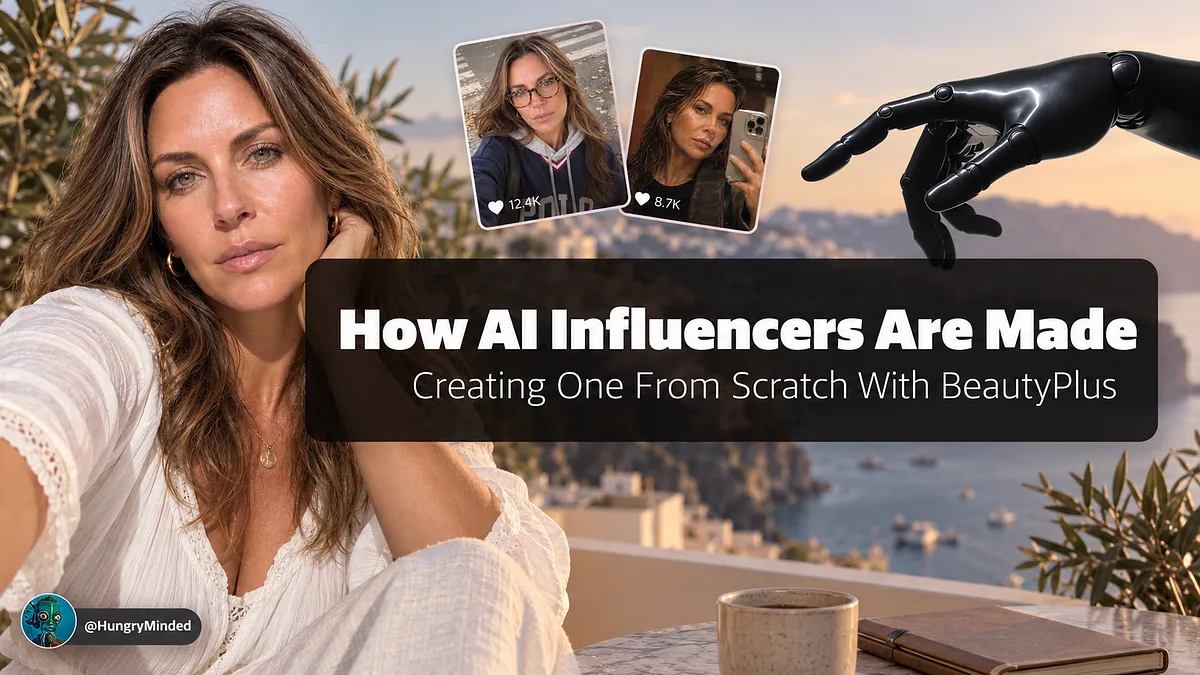
How AI Influencers Are Made: Creating One From Scratch With BeautyPlus I created a virtual influencer from scratch to see how convincing — and how easy — the process has become. Nowadays …
Runway’s Solaris points to a future where interfaces are generated in real time. Useful idea — but only if QA learns to verify behavior, not just pixels…
HyperFrames points to a better AI video workflow: start from real product artifacts, preserve the design system, and turn existing work into launch assets…