
Image by HungryMinded
AI Workflow Trust Is the Real Moat
Share this post:
https://smartoolbox.com/blog/workflow-trust-is-becoming-ais-real-moat
Work Smarter Not Harder
Stay up to date with the latest AI tools with Smartoolbox.com

Stay up to date with the latest AI tools with Smartoolbox.com
Explore tools
Agen is a platform for fully autonomous AI coding agents that run in the cloud. You connect a Git repo, describe a task in plain English, and agents clone the code, explore the codebase, write changes, run the pipeline, fix CI failures themselves, and hand back a merge-ready pull request with a live preview — no IDE, no local setup, no babysitting. It supports multi-repo sessions, unlimited parallel agents, scheduled runs with budget limits, and mobile task assignment. Agen positions itself against IDE-bound copilots and single-repo agents by being cloud-native from day one, with flat $59/mo pricing versus metered competitors. Non-technical teammates can assign work while engineers keep merge control. New accounts get $20 in free credits, making it easy to test on a real codebase before committing.
We created autonomous AI Agents that monitor the stock market for you while you go about your day.<p>How it works: Tell our AI Assistant what you want to monitor, and it creates a project for our team of autonomous AI Agents. You'll get notifications (email + app) when significant events matching your criteria are detected. For short-term projects, you'll be notified when your analysis is ready.<p>Behind the scenes: When you give the AI Assistant a request to monitor an entity (like a stock or group of stocks), an AI Project Manager plans the project and breaks the project down into manageable tasks. These tasks run asynchronously - some recurring (hourly/daily/weekly/monthly/quarterly/yearly), others one-time.<p>Example prompts you can try: Long-term monitoring: - "Monitor Apple stock and notify me of any important events and red flags" - "Monitor Apple, Google, Microsoft, and Meta stock. Notify me if any of them start trending toward being undervalued"<p>Short-term analysis: - "Create a project to analyze the last 30 earnings calls for Tesla, spot trends, and how the business has evolved over time"<p>You can track the progress of all tasks as the AI Agents work in the background.<p>Try it here: <a href="https://decodeinvesting.com/chat" rel="nofollow">https://decodeinvesting.com/chat</a><p>This is still an early version - we're actively improving it based on feedback. Would love to hear what you think and what features you'd want to see next!<p>Previously shared our AI-powered Stock Market Research Analyst: <a href="https://news.ycombinator.com/item?id=41156478">https://news.ycombinator.com/item?id=41156478</a>
Claude Code is Anthropic's AI coding assistant built for developers who want a stronger problem-solving workflow than a generic chat tab. It is positioned as an agent-style coding tool that helps with implementation, debugging, codebase understanding, and iterative software work for real projects. Unlike a broad assistant entry for Claude itself, Claude Code deserves its own listing because the product is specifically aimed at development tasks and is used as a dedicated coding workflow rather than a general-purpose chatbot. That makes it relevant for engineers comparing terminal and IDE coding agents, not just model brands. For developers evaluating practical AI coding tools with growing real-world usage, Claude Code is a distinct product that should be represented separately in the Smartoolbox directory.
Try it out
Describe any recurring workflow — support triage, lead qualification, research ops, QA, reporting, or back-office reviews — and get a concrete AI agent deployment plan. The output maps the workflow into agent responsibilities, human approval points, tool access, permission scopes, failure modes, observability needs, and rollout phases. It is designed for teams that want to move from vague agent ideas to something production-ready without skipping governance.
Business & strategyThis prompt helps teams evaluate whether an AI agent feature is actually ready for real-world deployment instead of just looking impressive in a demo. It is designed for product managers, founders, operators, and technical leads who need to assess permissions, observability, spend controls, approval checkpoints, failure handling, and auditability before putting agentic workflows in front of customers or employees. The output turns a vague concept or existing workflow into a governance readiness audit with specific risks, missing controls, and prioritized improvements. That makes it useful when a team is moving from prototype to production, preparing for enterprise buyers, or trying to avoid expensive trust failures. It focuses on the operational layer that determines whether an agent can be governed responsibly, not just whether the underlying model is smart enough.
Career & productivityUse this prompt to convert messy human-oriented documentation into a structured action spec that an AI agent, automation system, or internal tool could follow more reliably. It is useful when teams have SOPs, onboarding docs, API notes, support playbooks, or internal process guides that are understandable to humans but too ambiguous for consistent machine execution. The output rewrites the material into clear steps, decision rules, required inputs, expected outputs, edge cases, and escalation paths, while preserving uncertainty instead of pretending the original documentation was complete. This makes it valuable for operations teams, product builders, AI workflow designers, and companies trying to make their institutional knowledge more machine-readable without rewriting everything from scratch. It focuses on practical clarity, not abstract theory about documentation quality.
Keep reading
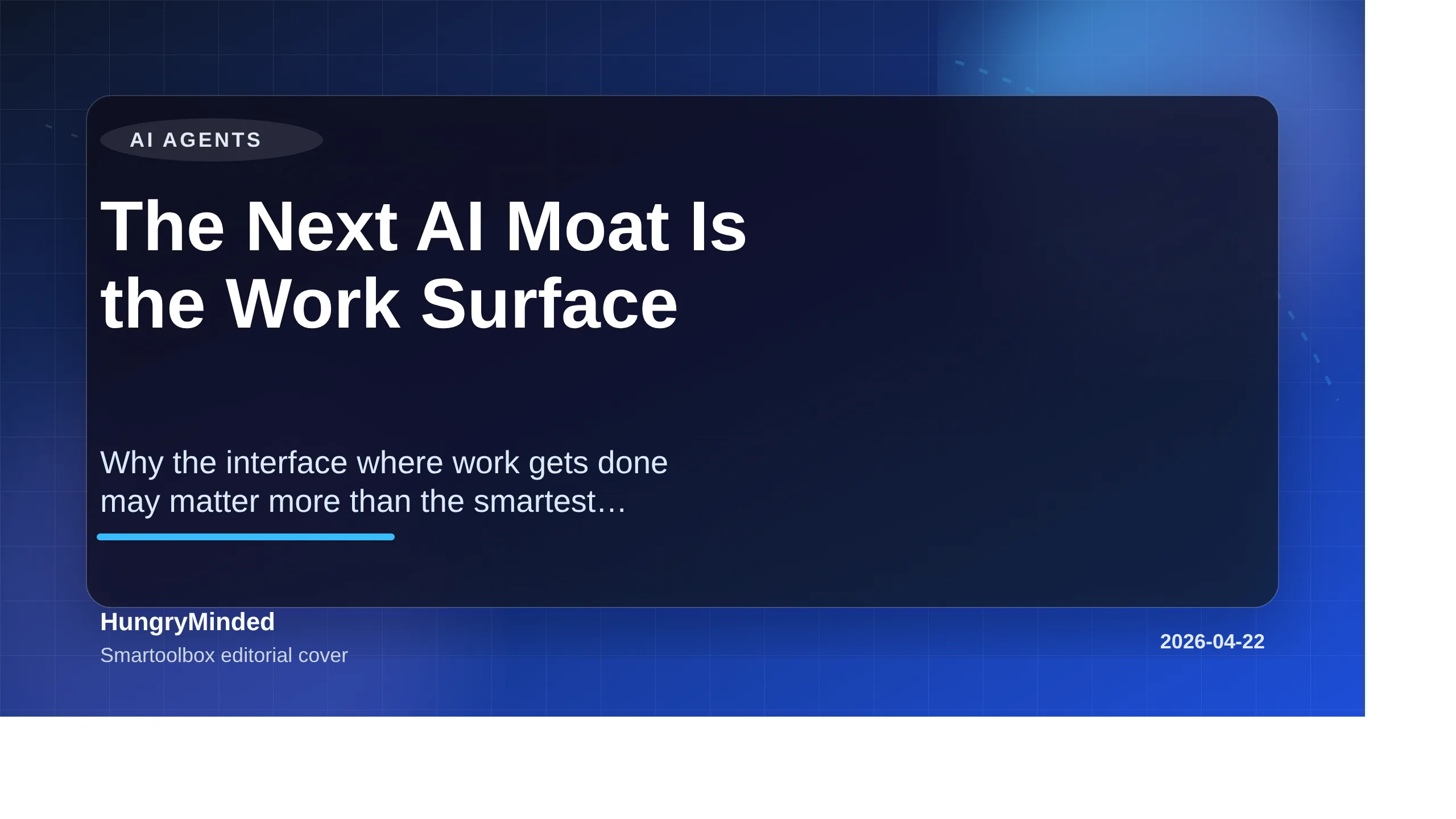
The next durable AI moat may not be model quality alone. It may be the interface, workflow, and context layer where real work gets done.

OpenAI is reportedly merging ChatGPT, Codex, and its Atlas browser into a single desktop app. At almost the same moment, the Claude Code leak exposed hidden references to background daemons, periodic “tick” prompts…
ElevenLabs in Claude and Cursor Origin show why the next useful AI interface may be the one that safely runs the workflow…