Image by HungryMinded

Dynamic Workflows: How Anthropic Made Claude an Engineering Team

Share this post:
https://smartoolbox.com/blog/dynamic-workflows-coordination-infrastructure
Robot mascot

Work Smarter Not Harder

Stay up to date with the latest AI tools with Smartoolbox.com

Pointing hand

Join Our Newsletter

Explore tools

Related tools

View all
Claude Code favicon
Claude Code
No ratings yet

Claude Code is Anthropic's AI coding assistant built for developers who want a stronger problem-solving workflow than a generic chat tab. It is positioned as an agent-style coding tool that helps with implementation, debugging, codebase understanding, and iterative software work for real projects. Unlike a broad assistant entry for Claude itself, Claude Code deserves its own listing because the product is specifically aimed at development tasks and is used as a dedicated coding workflow rather than a general-purpose chatbot. That makes it relevant for engineers comparing terminal and IDE coding agents, not just model brands. For developers evaluating practical AI coding tools with growing real-world usage, Claude Code is a distinct product that should be represented separately in the Smartoolbox directory.

THR favicon
THR
No ratings yet

THR is a small local CLI that gives coding agents semantic memory without sending private context to a hosted service. The README describes explicit memory saving, recall by meaning or exact text, stable JSON output, offline semantic search, and installable skills for Codex, OpenCode, and Claude Code. It is aimed at developers who repeatedly teach agents project rules, preferences, and lessons, then lose that context between sessions. THR fits the growing class of local agent-memory utilities because it is simple enough for terminal workflows while still designed for machine-readable agent integration. It is notable now because coding agents are becoming persistent collaborators, but many teams want memory to stay local, auditable, and easy to reset.

Coord favicon
Coord
No ratings yet

Coord is a local coordination layer for teams running several AI coding agents in parallel. It gives Claude Code, Cursor, Codex and other agent sessions a shared bulletin board with atomic task claims, heartbeats, blocking watches, an optional markdown audit trail and a local SQLite-backed control surface. That solves a very practical failure mode: one agent fixes a bug while another continues building on stale assumptions because the sessions cannot see each other. Coord is useful for developers experimenting with multi-agent coding, worktree-based parallelism, or agent swarms that need lightweight synchronization without a hosted platform. It is notable now because parallel coding agents are becoming normal, and the project targets their coordination problem directly with MCP plus A2A-style primitives.

Try it out

Related prompts

View all
Business & strategy

Turn a repetitive business workflow into an AI agent deployment plan

Describe any recurring workflow — support triage, lead qualification, research ops, QA, reporting, or back-office reviews — and get a concrete AI agent deployment plan. The output maps the workflow into agent responsibilities, human approval points, tool access, permission scopes, failure modes, observability needs, and rollout phases. It is designed for teams that want to move from vague agent ideas to something production-ready without skipping governance.

Business & strategy

Audit whether an AI agent feature is ready for real-world governance

This prompt helps teams evaluate whether an AI agent feature is actually ready for real-world deployment instead of just looking impressive in a demo. It is designed for product managers, founders, operators, and technical leads who need to assess permissions, observability, spend controls, approval checkpoints, failure handling, and auditability before putting agentic workflows in front of customers or employees. The output turns a vague concept or existing workflow into a governance readiness audit with specific risks, missing controls, and prioritized improvements. That makes it useful when a team is moving from prototype to production, preparing for enterprise buyers, or trying to avoid expensive trust failures. It focuses on the operational layer that determines whether an agent can be governed responsibly, not just whether the underlying model is smart enough.

Career & productivity

Turn human-written documentation into an AI-agent-ready action spec

Use this prompt to convert messy human-oriented documentation into a structured action spec that an AI agent, automation system, or internal tool could follow more reliably. It is useful when teams have SOPs, onboarding docs, API notes, support playbooks, or internal process guides that are understandable to humans but too ambiguous for consistent machine execution. The output rewrites the material into clear steps, decision rules, required inputs, expected outputs, edge cases, and escalation paths, while preserving uncertainty instead of pretending the original documentation was complete. This makes it valuable for operations teams, product builders, AI workflow designers, and companies trying to make their institutional knowledge more machine-readable without rewriting everything from scratch. It focuses on practical clarity, not abstract theory about documentation quality.

Keep reading

Related articles

View all
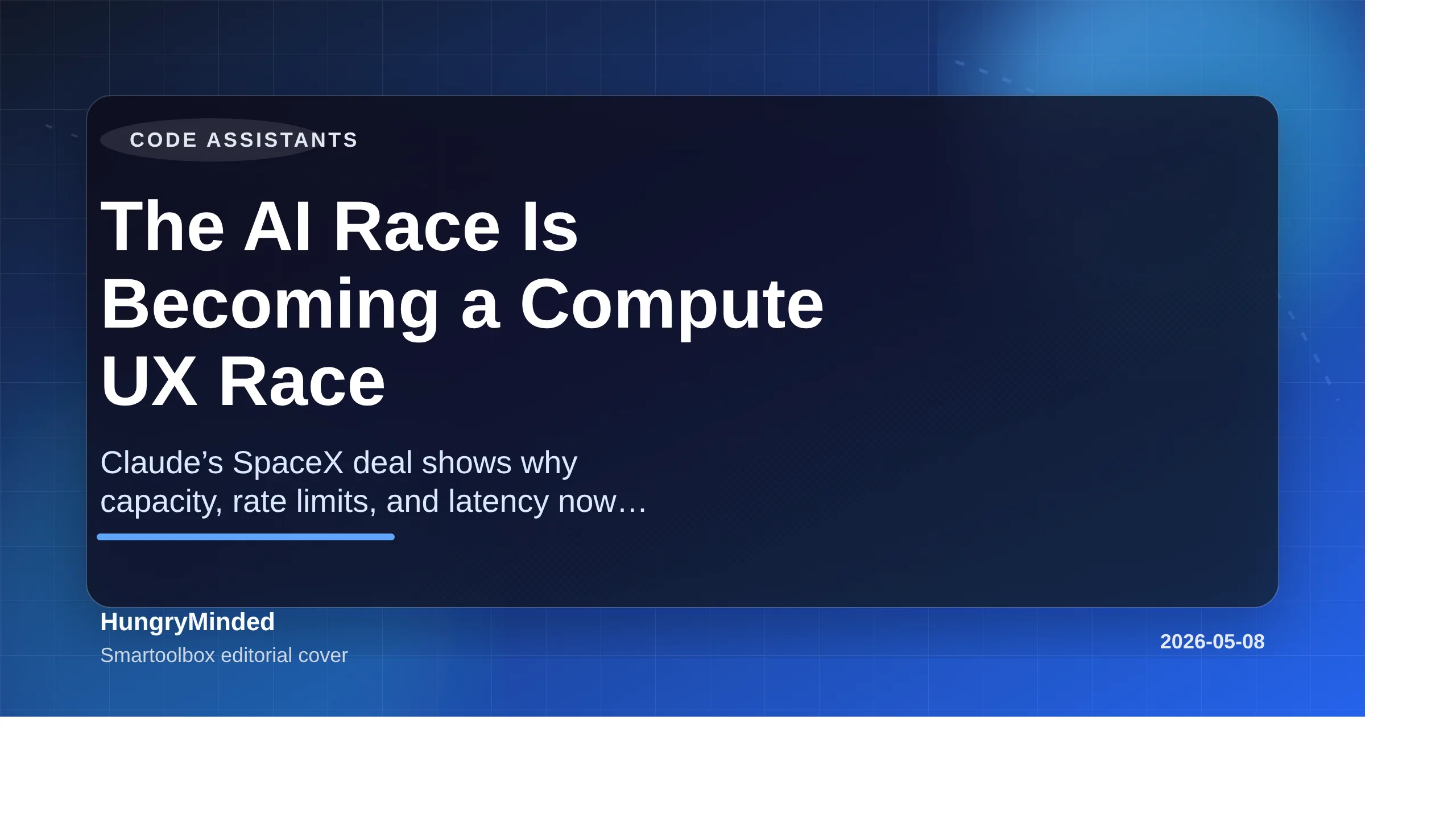
Branded HungryMinded cover reading Compute Is UX with abstract AI infrastructure frames.
May 8, 2026 · 8 min read

The AI Race Is Becoming a Compute UX Race

Claude’s SpaceX deal shows why AI quality is no longer just about models. Capacity, limits, latency, and reliability are becoming product experience…

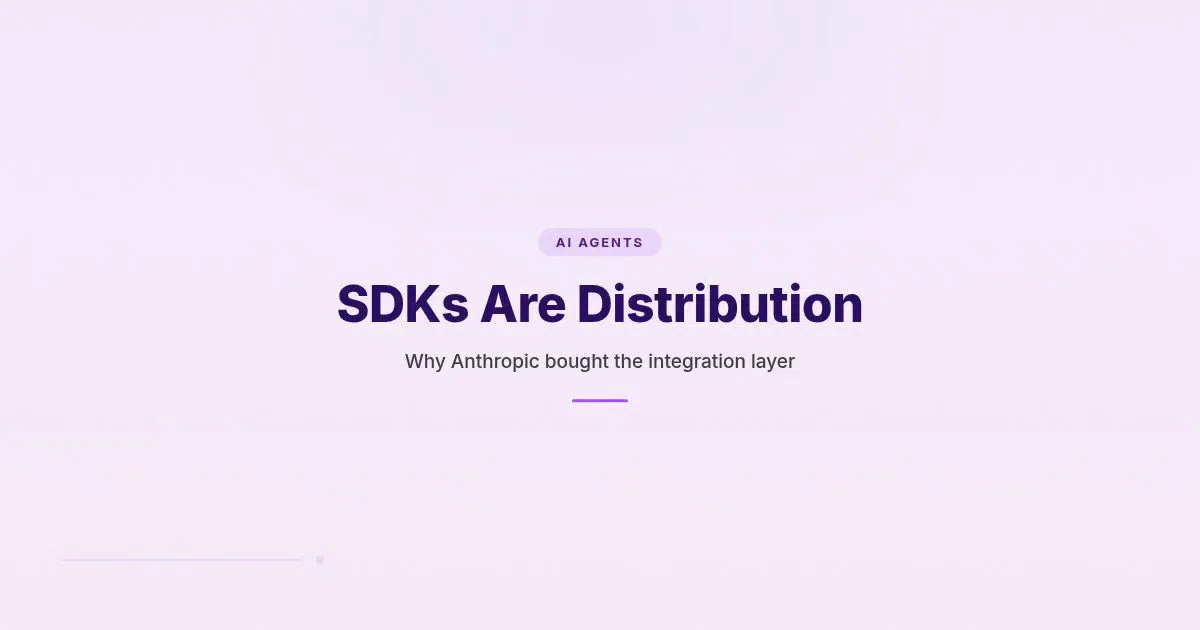
Branded HungryMinded cover reading SDKs Are Distribution with a subtitle about Anthropic buying the integration layer.
May 19, 2026 · 7 min read

Anthropic Bought Stainless Because SDKs Are Distribution

Anthropic’s Stainless acquisition shows why SDKs, MCP servers, and reliable connectors are becoming real AI distribution infrastructure…

Cover image for an article about coding AI tools shifting from copilots to AI foremen that manage tasks and parallel work.
April 14, 2026 · 7 min read

The Best Coding AI Is Starting to Look Less Like a Copilot and More Like a Foreman

Claude Code and Codex are both moving beyond autocomplete toward planning, delegation, and supervision. That shift matters more than the next benchmark…